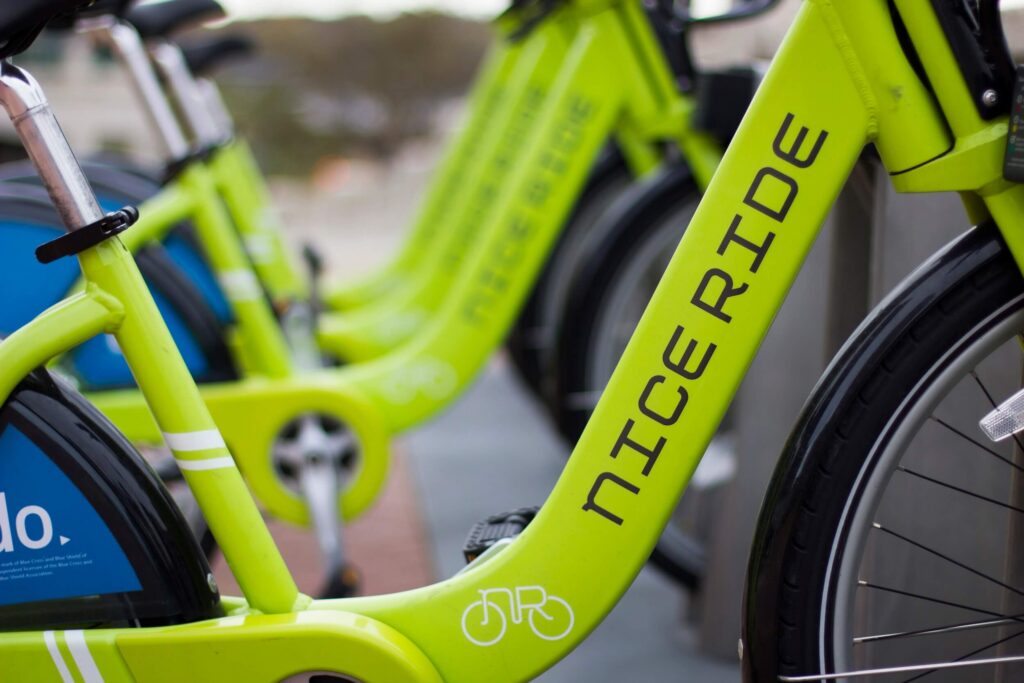
 I ride an e-bike every single week, usually more than once a week. It gets me to beautiful locations in my county as well as into the City of San Francisco, sometimes faster than I’d ever get there in a car — and on the right stretch of road or trail, it’s honestly one of the best parts of my week. So when I saw that San Mateo County’s Board of Supervisors unanimously advanced a new e-bike safety ordinance this week, I read it not just as a San Francisco personal injury attorney who handles bicycle and e-bike crash cases, but as someone who’s genuinely grateful the county is taking bicycle and pedestrian safety seriously.
What Happened
The ordinance grew out of an unbearable loss. In August 2025, 4-year-old Ayden Fang was playing on a sidewalk outside a restaurant in Burlingame when a chain of events involving two children on an e-bike, a startled teenage driver, and a car that ended up on the sidewalk took his life in front of his parents. His father, Xiaoming Fang, has spent the year since turning that grief into advocacy, and this week the Board of Supervisors listened. Supervisors are now directing staff to name the ordinance after Ayden ahead of its second reading.
As someone who works with grieving families for a living, I don’t say this lightly: it takes extraordinary strength to walk into a public meeting and push for change in the middle of unimaginable loss. Mr. Fang did that, and San Mateo County responded. That’s local government working the way it’s supposed to.
What the New Rules Actually Do
The ordinance is a meaningful, practical step forward. Once it takes effect in January 2027, it will:
Just as importantly, the ordinance starts closing a loophole that’s frustrated law enforcement for years: today’s rules define “e-bike” too narrowly to reach so-called “e-motos” — throttle-heavy devices built to look like e-bikes but capable of speeds well beyond what a legal, regulated e-bike can do. Those devices have been slipping through sidewalks and bike lanes essentially unregulated. Closing that gap is overdue.
While the ordinance technically only applies to unincorporated parts of the county, Supervisor Jackie Speier, who led the effort, has been clear that it’s meant as a template other Peninsula cities can adopt and adapt locally. I hope they do, and I hope that this push for e-bike and pedestrian safety catches on in all San Francisco Bay Area cities as well as in all of our Northern California counties.
Why an E-Bike Accident Attorney Is Applauding a New Law
I’ll be direct: stricter e-bike rules are good for riders, not just good for the people around them. Every year, I see the same injuries come through my door — broken hips, road rash requiring skin grafts, concussions and worse, in riders young and old. As one sheriff’s deputy at the hearing put it, the injury patterns showing up in e-bike crashes now look a lot like what used to be almost exclusively motorcycle-crash territory. That’s not a reason to fear e-bikes; it’s a reason to take the speeds, equipment, and training seriously — which is exactly what this ordinance begins to do.
The numbers back up why this matters right now. Reported e-bike accidents across California climbed from just a couple of cases in 2018 to more than 1,500 in 2024, according to research out of UC San Diego. That’s not a fluke — it’s the predictable result of a genuinely great technology scaling up faster than our infrastructure, our enforcement, and our public education have kept pace with. Rules like San Mateo County’s are how we catch up.
To be fair, the ordinance has its critics, and their questions are worth sitting with. Commenters on the original story pointed out — accurately — that nothing in this specific ordinance would have stopped the exact sequence of events that killed Ayden, since the collision that set everything in motion involved a driver, not an e-bike rider breaking the new rules. That’s a fair point, and it’s one I’d make in a courtroom too: a single ordinance can’t undo a single tragedy after the fact. But that’s not really the test. The test is whether these rules reduce the odds of the next Ayden — the next sidewalk collision, the next high-speed e-moto weaving through pedestrians, the next kid who doesn’t get the chance to grow up. On that measure, I think this ordinance is a real step in the right direction, even if it isn’t the last one needed.
What This Means for You as a Rider — or as Someone Sharing the Road
Whether you’re an e-bike rider like me, a parent of a kid who just got their first electric bike, or a pedestrian who wants sidewalks to stay walkable, here’s the practical takeaway:
We Should Applaud This — and Keep Pushing
It’s rare that I get to write about a local government doing something I have no notes on. San Mateo County didn’t rush this. They held town halls, brought in doctors, law enforcement, and e-bike advocates, and turned a parent’s unbearable grief into a policy that will genuinely make Peninsula sidewalks safer. That deserves real credit — from riders like me, from the families I represent, and from anyone who wants California’s cities to get ahead of a fast-growing safety problem instead of playing catch-up after the next tragedy.
I hope every city on the Peninsula — and honestly, every city in California — is watching what San Mateo County just did and asking whether it’s time to do the same.
If you or someone you love has been injured in a bicycle or e-bike accident in California, you don’t have to sort out fault, insurance, and medical bills on your own. Our firm represents injured cyclists and e-bike riders — and the families of pedestrians hurt by unsafe riders and drivers— throughout San Mateo County and the greater Bay Area. Contact us today for a free, no-obligation consultation to talk through what happened and what your options are.