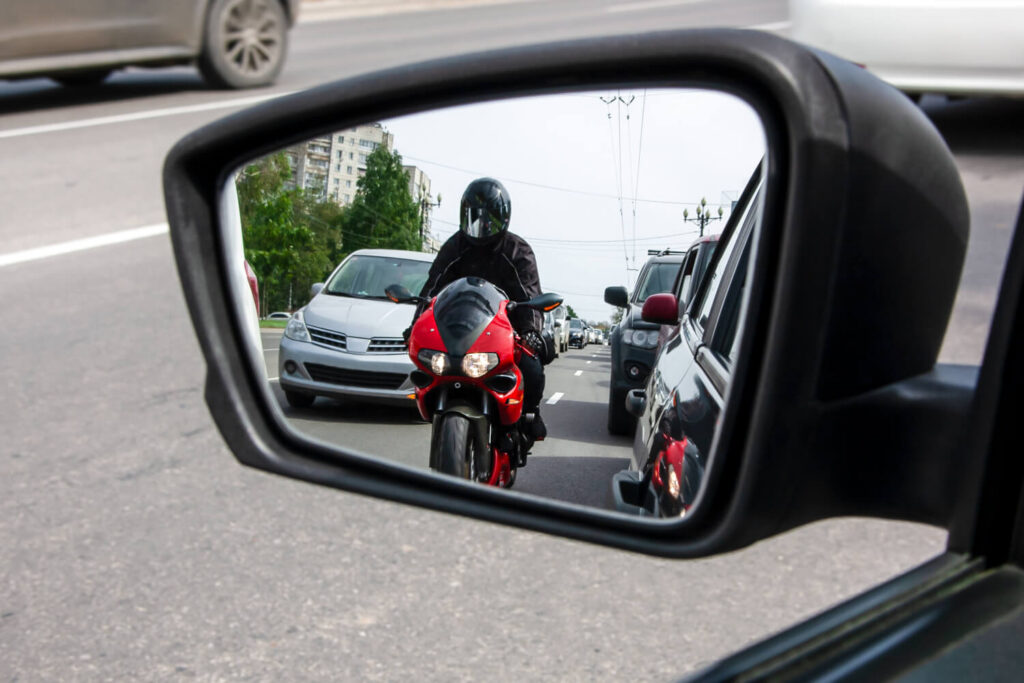
You might be sitting there replaying the crash in your mind, wondering if you could have done something different. Maybe you were splitting lanes, maybe a driver cut you off, maybe you were going a little over the speed limit. Now the insurance adjuster is hinting that you are “partly at fault,” and your stomach drops. You start to worry that this means you get nothing.
The core issue is fault and how the law treats it. In motorcycle cases, blame rarely falls on only one person. California uses a system called comparative negligence, and it decides how much money you can recover even if you made a mistake. You do not need to become a legal expert right now. You just need to understand how fault is shared, how that affects your recovery, and what you can do to protect yourself.
California does not use harsh contributory negligence rules that erase your claim for a small mistake. Instead, your compensation is reduced by your share of fault. The right evidence and advocacy can shift that percentage, which can mean a difference of tens or hundreds of thousands of dollars for an injured rider.
After a motorcycle collision in San Francisco, the story rarely matches the police report word for word. You might have been seen as the “fast biker” while the driver who pulled out in front of you is painted as the careful commuter. Insurance companies lean on those stereotypes. They try to turn every gray area into “the rider is mostly to blame.”
Under a contributory negligence system, even 1 percent fault on your part could destroy your entire claim. Some states still use that rule. California does not. California follows pure comparative negligence
The law sounds simple, but the fight is over that percentage. Every point of fault that gets shifted to you is money that stays in the insurance company’s pocket. For a rider with broken bones, a long rehab, and months off work, that number matters more than any legal theory.
Picture this. You are riding on Market Street. A car in the next lane suddenly turns right across your path to catch a parking spot. You hit the brakes, but you still collide and go down hard. The driver says you were lane splitting “too fast” and came out of nowhere.
The insurance adjuster calls and sounds almost sympathetic. Then the questions start. “You were between lanes, right? Was traffic stopped? You know that can be unsafe?” You feel cornered. You admit you were between cars and moving faster than traffic, and suddenly they are suggesting you are 60 percent at fault.
Here is the problem. Without context, your own words can be twisted against you. Lane splitting is not illegal in California. The California DMV has guidance for riders that acknowledges lane sharing and offers safety tips, not a blanket ban. You can see that guidance in the state’s Motorcyclist’s Guide from the DMV. Done safely, your riding behavior might be reasonable, even if the driver insists you “came out of nowhere.”
Another common situation. You are on a two-lane road outside San Francisco. A car pulls out of a driveway. You swerve, lay the bike down, and still crash. You were going 10 to 15 miles over the posted limit. The insurer argues that your speed caused the crash and wants to tag you with most of the fault.
Under pure comparative negligence, the truth might be more balanced. Maybe a jury would say the driver is 70 percent at fault for failing to yield, and you are 30 percent at fault for speeding. On 300,000 dollars in damages, that difference is huge. The law does not erase your claim just because you were not perfect.
California juries receive standard instructions on comparative negligence. They are told to assign a percentage of responsibility to each person whose conduct contributed to the harm. The Judicial Council’s official civil instructions describe that process in detail. You can look at those instructions in the California Civil Jury Instructions.
The key idea is this. Fault is not all or nothing. A rider can be partially responsible and still recover money. Evidence like skid marks, impact points, video, phone records, and witness statements can change the entire picture of who did what and when. A driver who was texting or rushing a light might carry far more responsibility than their insurance company wants to admit.

Insurance companies are trained to use California’s comparative negligence rules against riders. They ask leading questions. They focus on your gear, your speed, your lane position, your visibility, anything that can be spun as “unsafe.” They do this because every extra 10 percent of fault pinned on you cuts their payout by 10 percent.
If California used contributory negligence, those conversations would be even more brutal, because any small misstep could kill the claim entirely. The good news is that in California, motorcycle accident fault rules give injured riders more room to recover, as long as the evidence is built correctly and you do not accidentally give up ground during early talks.
The legal terms can feel abstract when you are just trying to pay rent and medical bills. The table below connects the theory to real money for riders.
| Fault System | What It Means For Riders | Example Outcome on 250,000 Dollar Claim | Practical Impact |
| Pure Comparative Negligence (California) | Your compensation is reduced by your percentage of fault, but you can recover even if you are mostly at fault. | Rider 40 percent at fault, driver 60 percent. Rider can recover 150,000 dollars. | Focus is on pushing your fault percentage as low as the evidence supports. |
| Contributory Negligence (not used in CA) | Any fault on your part, even 1 percent, can bar your recovery completely. | Rider 5 percent at fault. Rider recovers 0 dollars. | Insurers fight to show even the smallest rider mistake to avoid paying. |
| Modified Comparative (used in some states) | You can recover only if your fault is below a certain threshold, often 50 or 51 percent. | Rider 51 percent at fault. Rider recovers 0. At 49 percent, rider recovers 127,500 dollars. | Every small shift in fault can flip the outcome from something to nothing. |
California’s pure comparative system is more forgiving to injured riders, but it also gives insurers a clear playbook. They do not need to prove you were entirely to blame. They just need to move the needle enough to save themselves money.
Certain facts tend to move that fault percentage in motorcycle cases. Some favor the rider. Some hurt the rider if they are not explained and documented correctly.
Helpful to your side. A clear traffic violation by the driver, such as failing to yield, running a red light, or making an unsafe lane change. Cell phone use or distraction. Independent witnesses who back up your account. Video footage from dashcams, businesses, or traffic cameras. Visible damage that supports your version of the crash dynamics.
Potentially harmful if left unchallenged. Allegations of high speed, weaving, or following too closely. No visible gear, like missing helmet or dark clothing at night. Lane splitting in heavy traffic, even though it is legal. Gaps or confusion in your own memory of the crash, which is common when you are badly hurt.
California insurance guidance acknowledges fault rules and claims handling. The Department of Insurance has an Auto Insurance 101 resource that shows how carriers think about claims, coverage, and responsibility. What it does not show is how aggressively they may try to apply those concepts against a motorcyclist after a serious crash.
1. Stop giving informal statements and start preserving evidence
If you have already spoken with the other driver’s insurer, stop and do not agree to recorded statements or “just a few more questions.” Adjusters sound casual, but they are building a case to raise your fault percentage. Write down everything you remember about the crash, including time, weather, traffic, and what the other driver said at the scene. Save your helmet, gear, and damaged bike parts. Photos of the scene, injuries, and road conditions can be powerful proof that your riding was reasonable.
2. Get medical care and document every impact on your life
Comparative negligence does not only touch fault. It also interacts with your damages. Insurers sometimes argue that if you delayed treatment or tried to tough it out, your injuries are “not that bad” or are partly your fault for getting worse. See a doctor, follow treatment plans, and keep copies of everything. Track missed work, canceled plans, and the ways pain limits your day. This record supports the full value of your claim, so any reduction for shared fault starts from a fair number.
3. Talk with a San Francisco motorcycle accident lawyer before you negotiate
On your own, you are up against adjusters who handle claims all day, who know exactly how to use comparative negligence rules.
You might feel torn between guilt and anger. Maybe you think, “I could have been more careful,” and at the same time you know the driver never should have turned, pulled out, or drifted into your lane. Both can be true. California’s comparative negligence system for motorcycle crashes exists for exactly that kind of shared responsibility. It does not erase your claim just because your ride that day was not perfect.
You do not have to sort through fault percentages, legal instructions, and insurance pressure alone. Our San Francisco personal injury attorneys have been representing victims in a variety of types of cases for decades. The team at Choulos, Choulos & Wyle Personal Injury Lawyers is ready to help. If you or a loved one is a victim, you can turn to our law firm with confidence.
For a focused review of your situation and a clear plan for what to do next, call (415) 432-7290. You handle your recovery. The legal team can handle the fight over fault.