
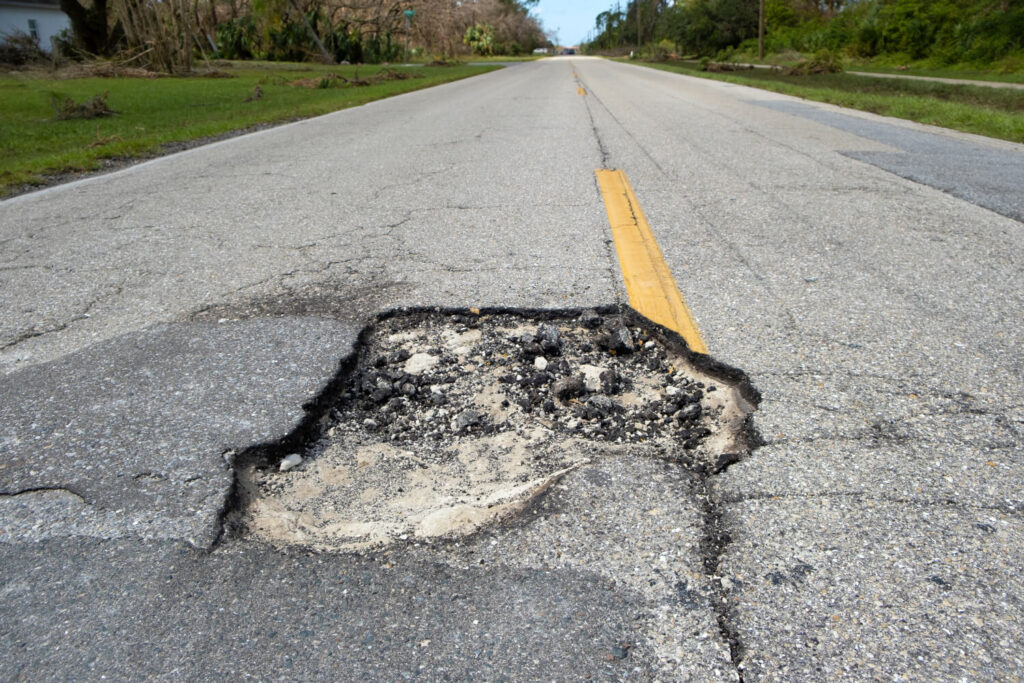
It might have started as a normal ride. You knew the route, you watched the traffic, you did everything right. Then your front wheel hit a deep pothole or the edge of a steel construction plate, and in a split second, you were on the ground, in pain, wondering how this could happen on a San Francisco street.
Now you may be juggling medical appointments, a damaged bike, missed work, and a nagging question that will not go away. If this road hazard caused your crash, can you hold the city or the construction company responsible, or are you just stuck with the fallout?
The short answer is that in some cases you can pursue a claim against the City and County of San Francisco, Caltrans, or a private contractor, but the rules are strict, deadlines are short, and the agencies do not make it easy. You need to understand who might be at fault, how notice and timing work, and what your options are if your injuries are serious.
Because of this tension between feeling wronged and not knowing what is possible, it helps to slow things down and walk through what really matters after a bicycle crash caused by a pothole or construction plate.
How do pothole and construction plate crashes even become a legal case?
When you are lying on the pavement, it does not feel like a “case.” It just feels unfair. You were sharing the road, then the road failed you. Maybe the pothole was so deep that your wheel locked. Maybe the steel plate was raised or had a sharp edge, or there was no warning sign, and cars were pushing you right toward it.
Legally, these crashes usually fall under something called “dangerous condition of public property.” In plain terms, the law can hold a city, state agency, or contractor responsible when:
- The roadway was in an unsafe condition.
- The government or contractor knew, or reasonably should have known, about the danger.
- They had enough time and ability to fix it or warn you, and they did not.
- That unsafe condition was a substantial cause of your injury.
So, where does that leave you if you crashed because of a pothole or loose plate in San Francisco?
Imagine two common situations.
- Scenario 1. A pothole on a busy San Francisco bike route has been there for months. Neighbors have reported it multiple times through 311. Cyclists have complained on social media. You hit it, crash, and break your collarbone.
- Scenario 2. A construction company working on a utility line puts down a steel plate. It is not flush with the road; there is a lip, and there are no cones or warning signs. Your tire catches the edge, you go over the bars, and you suffer a head injury.
In the first, the City or another public agency may be responsible. In the second, the private contractor, and possibly the City that allowed the work, may share responsibility. In both, the condition of the road is not just annoying. It is dangerous, and it changed your life in an instant.
Why do government claims feel so frustrating and confusing?
Once you start asking whether you can sue over a San Francisco road defect bicycle accident, you run into a maze of rules. With government agencies, you do not simply file a normal lawsuit right away. For most public entities in California, you must first file an administrative claim within a very short time, often 6 months from the date of the crash.
That deadline alone can create panic. You might still be in treatment, trying to figure out your prognosis, when paperwork is already due. If you miss it, you can lose your right to compensation from that public entity, even if the defect was obvious and severe.
Another frustration is proof. The City or contractor may argue that the pothole “just happened,” that the steel plate was “within standards,” or that you were riding too fast. You may feel like the blame is shifting back onto you, even though you were the one who got hurt.
On top of that, you may be dealing with medical bills, lost wages, and the emotional impact of not being able to ride or work the way you used to. It is common to feel angry, overwhelmed, and unsure whether fighting the City or a construction company is even worth the effort.
That is where a focused bicycle accident lawyer can step in. The right legal team looks at the condition of the street, the history of complaints, the permits for the construction work, and the specific rules that apply to public entities and contractors. Instead of you trying to figure out who did what and when, they do the digging while you focus on healing.
Should you try to handle a pothole or plate claim on your own?
Some riders wonder if they should file on their own, especially if they think the crash was “minor.” Others have serious injuries and know they need help. You might be asking where that line is.
Here is a simple comparison to help you understand the tradeoffs.
| Approach | Best For | Pros | Cons |
| DIY government claim or small claim | Very minor injuries, low medical bills, clear damage under small claims limits | More control, no attorney fee, faster small claims process | Strict rules, easy to miss deadlines, the government has lawyers, hard to value future losses |
| Working with an experienced injury attorney | Moderate to severe injuries, surgery, long recovery, ongoing pain, or disability | Deadlines handled, evidence preserved, full damages evaluated, negotiation and litigation done for you | You share a portion of the recovery as a fee; the case may take longer, but it often aims for a higher and fairer result |
If your damages are small and you want to explore handling things yourself, you can look at the San Francisco small claims resources from the court system. They explain how small claims work and what you can ask for. You can start with the San Francisco small claims self-help page.
For claims against government agencies more broadly, the California courts provide guidance on asking for money from a public entity, including notice rules and timelines. You can review that information at the state government agency claim guide.
Caltrans also has its own process and policies when road conditions on state routes cause damage. If your crash involved a state-maintained road, their statement about pothole and damage claims gives a sense of how they respond and what they consider.
If your injuries are serious, though, trying to navigate these systems alone can be risky. Once you settle or miss a deadline, you usually cannot go back and ask for more, even if your condition turns out to be worse than you first thought.
What steps should you take right now to protect yourself?
You do not have to have everything figured out to take smart steps today. A few focused actions can make a big difference in your ability to bring a pothole crash claim or a claim involving a dangerous construction plate.
- Preserve evidence of the road hazard and your injuries
If you are able, or if a friend can help, gather proof as soon as possible.
- Take clear photos and video of the pothole or plate from multiple angles, including something to show scale, like a water bottle or tire.
- Photograph your bike, helmet, and any torn or damaged clothing.
- Save contact information for witnesses who saw the crash or the condition of the road.
- Write down everything you remember while it is still fresh, including time of day, weather, traffic, and how your wheel interacted with the defect.
- Get medical care and keep all records
Even if you tried to “walk it off,” get checked out. Some injuries are not obvious right away, especially head, neck, and internal injuries.
- Follow up with your doctor and any specialists they recommend.
- Keep copies of medical reports, bills, prescriptions, and physical therapy notes.
- Track how your injuries affect daily life, including work, sleep, and your ability to ride or care for family.
These records help connect your injuries to the crash and show the full impact on your life, which is critical in any bicycle accident claim involving a dangerous street condition.
- Talk with a San Francisco bicycle accident lawyer as early as you can
Because of the short deadlines and special rules for claims against public entities, time really matters. Speaking with a lawyer who understands road defect cases in San Francisco can help you:
- Identify who is responsible, whether it is the City, Caltrans, a contractor, or more than one party.
- Meet the government claim filing deadlines so your rights are preserved.
- Evaluate whether your case is better suited to informal negotiation, a formal claim, or a lawsuit.
The attorneys at Choulos, Choulos & Wyle focus on bicycle and pedestrian cases in San Francisco. They understand how a crash like this ripples through your health, your work, and your sense of safety on the road.
Where do you go from here after a San Francisco road hazard crash?

You did not choose that pothole or that raised construction plate. You chose to ride your bike, to trust that the streets would be reasonably safe. When that trust is broken, you deserve answers and support, not a maze of forms and blame.
You do not have to sort through government claim rules, contractor permits, and medical bills alone. Our San Francisco personal injury attorneys have been representing victims in a variety of types of cases for decades. The team at Choulos, Choulos & Wyle Personal Injury Lawyers is ready to help. If you or a loved one is a victim, you can turn to our law firm with confidence.
To talk about your crash, your options, and what accountability might look like in your situation, you can call (415) 432-7290. One conversation can bring clarity, and from there you can decide what feels right for you and your recovery.