You were riding or driving, doing everything right, when another car cut you off, drifted into your lane, or blew through a sign. You swerved to save your own life, maybe to avoid a direct hit, and ended up crashing. The other driver kept going or stopped and said, “I never hit you. This isn’t my fault.”
You might be sitting with medical bills, a wrecked bike or car, lost time from work, and this nagging fear that no one will believe you because there was no physical contact. You are not overreacting. This is one of the most confusing situations after a crash in California, especially for cyclists and motorcyclists who often lay the bike down to avoid something worse.
The core issue is simple. Another driver caused you to crash, but their vehicle never touched you. Can you still recover money for your injuries and losses? In California, the answer is yes. These are sometimes called “no contact” or “phantom vehicle” accidents, and they are real cases with real legal rights. The challenge is proving what happened and dealing with insurance companies that are trained to say no.
How California Law Treats No Contact Crashes
California does not require a physical collision to find someone at fault. The key questions are whether the other driver was negligent and whether that negligence caused your crash. A car that cuts you off, runs you off the road, or forces you to brake or swerve so hard that you fall has “caused” a collision, even if bumpers never touch.
Under California’s fault and financial responsibility rules, every driver must carry liability insurance to pay for harm they cause. The California Department of Insurance explains basic auto coverage and responsibilities in its auto insurance consumer guide. That duty to pay does not disappear just because they avoided scratching their own paint.
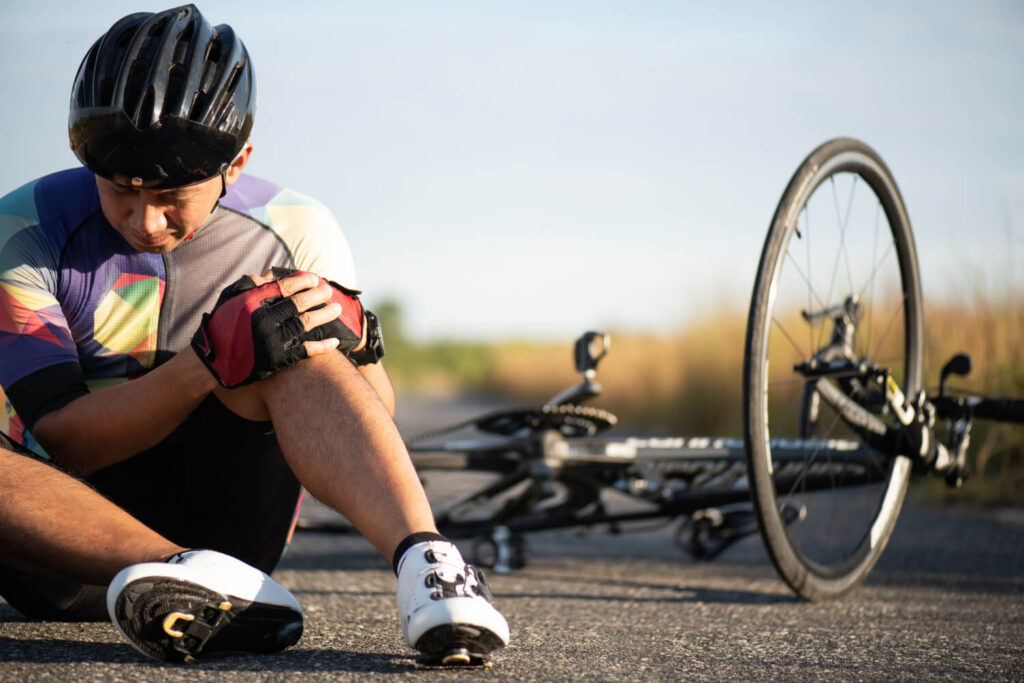
For cyclists in particular, this often shows up as a car turning right across a bike lane, drifting into the shoulder, or passing too close so you panic brake and go over the bars. The driver may never feel the impact. You feel the pavement. From a legal standpoint, this can still be a compensable bicycle accident case.
Why These Cases Feel So Unfair And So Hard
You might already be hearing it. “How do we know you didn’t just fall?” “Maybe you were going too fast.” “If the car never hit you, it’s not their fault.” That attitude is common from insurance adjusters, and sometimes even from the at-fault driver at the scene.
The emotional hit is real. You tried to avoid a deadly impact. You reacted in a split second the way any reasonable person would. Now you feel like you are being punished for doing the safer thing. On top of that, you may be dealing with concussion symptoms, fractures, road rash, or a totaled bike, and you are the one being questioned.
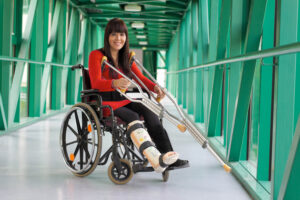
Financially, the pressure adds up. Medical co-pays, out-of-network bills, physical therapy, a new bike or wheelchair, and lost paychecks do not wait for an insurance company to make up its mind. If you are a daily rider in San Francisco, not having a working bike or car can affect every part of your routine, from work to caring for your family.
Legally, the biggest problem is proof. In a typical rear-end crash, the damage pattern often tells the story. In a no-contact crash, the other driver’s insurance company may claim there is “no evidence” their insured did anything wrong. That is where careful investigation and legal strategy matter.
Evidence That Can Turn A “No Contact” Story Into A Strong Claim
California collision and insurance rules focus on fault and responsibility, not just on who touched whom. The California Driver Handbook section on collisions and financial responsibility confirms that drivers must stop, exchange information, and report crashes. When they do not, or when they deny involvement, your side has to build the case.
Evidence that often makes the difference in a no-contact accident in California includes:
Witnesses who saw the other vehicle force you to swerve, video footage from nearby businesses, buses, or home cameras, bike computer or GPS data showing your path and speed, photos of skid marks, debris, and your final resting position, and prompt medical records that match your story of a sudden evasive maneuver.
In some cases, the other driver is identified and stays. In others, they leave and are treated as a hit-and-run or phantom vehicle. The California Department of Insurance has even flagged staged and suspicious crash scenarios in its automobile collision fraud bulletin, which ironically makes insurers more skeptical. A clean, consistent, well-supported account is crucial so your very real crash is not unfairly lumped in with fraud concerns.
Comparing Your Options After A No Contact Bicycle Or Vehicle Crash
Different paths carry different risks and benefits. Many people start by trying to handle things alone, then realize they are in deeper than expected once the first lowball offer or denial arrives.
| Approach | What It Looks Like | Common Risks | Potential Benefits |
| Handle the claim on your own | You speak directly with adjusters, send photos, answer recorded questions, and try to negotiate a settlement. | Saying something that gets twisted and used against you. Accepting a quick low offer. Missing sources of recovery like uninsured motorist coverage. | No legal fee. Full control over every conversation and decision. |
| Use only your own insurance | You open a claim with your insurer for medical payments or uninsured/underinsured motorist coverage if the other driver fled or denies fault. | Your own insurer may treat you like any other claimant and push back. Policy language can be confusing. Deadlines can be missed. | Can help when the at-fault driver is unknown or uninsured. May provide quicker partial payments for medical bills. |
| Work with a San Francisco personal injury lawyer | An attorney gathers evidence, deals with both insurers, and builds a liability case showing how the other driver caused the crash. | Attorney fee from the recovery. You need to choose a firm that understands bicycle and no-contact cases, not just generic car wrecks. | Stronger positioning on fault disputes. Protection from insurance tactics. Higher chance of capturing full damages, including future medical and lost earning capacity. |
Practical Insurance Issues That Affect Your Recovery
In these cases, you may be dealing with more than one policy. The other driver’s liability policy is the obvious one. Your own auto policy might have uninsured or underinsured motorist coverage that applies when a phantom driver causes a crash. Some cyclists are also covered under a household auto policy even if they were not driving.
Health insurance, MedPay, and sometimes disability coverage all interact with the injury claim. Each has its own rules, and some require repayment from any settlement. When a claim involves a disputed “no contact” scenario, insurers sometimes point fingers at each other. Having a clear theory of how the crash happened and who is responsible keeps your case from falling through the cracks.
Three Immediate Steps To Protect Your No Contact Crash Claim
1. Lock down evidence right away
Save your helmet, damaged bike or gear, and clothing. Do not repair or throw away anything yet. Take photos of the scene, your injuries, and any skid marks or broken parts. If you remember even part of the license plate, the color, make, or route of the other car, write it down while it is still fresh. Reach out to any witnesses and get their contact information. In a case where no physical contact occurred, these details often decide whether an insurer believes you.
2. Be very careful with insurance statements
Adjusters sound friendly, but their job is to limit payouts. Answer basic identification questions, but avoid giving a detailed recorded statement before you understand your rights. Do not guess about speeds, distances, or fault. Simple phrases like “I might have overreacted” are often twisted into admissions. You can tell an adjuster you are still getting medical care and gathering information before making a full statement.
3. Get a focused legal opinion early
No contact crashes are not standard fender benders. They involve contested fault, complex proof, and sometimes multiple insurance layers. A lawyer who regularly handles bicycle accident cases in San Francisco will know how local juries, judges, and insurers tend to see these scenarios. An early review can uncover evidence you have not thought about, like nearby security cameras or bus dash cams, and can keep you from signing away rights with a quick release.
Why Local, Bicycle Savvy Legal Help Matters
San Francisco streets are crowded with cyclists, pedestrians, rideshares, and delivery vehicles. A driver’s careless lane change or sudden right turn can turn your normal commute into months of recovery. When a crash happens because you swerved to avoid being hit, the law is still on your side, but you should not have to argue that alone.
Our San Francisco personal injury attorneys have been representing victims in a variety of types of cases for decades. The team at Choulos, Choulos & Wyle Personal Injury Lawyers is ready to help. If you or a loved one is a victim, you can turn to our law firm with confidence. Call (415) 432-7290 to talk about what happened, how a no-impact accident claim works in California, and what recovery could look like for you.