
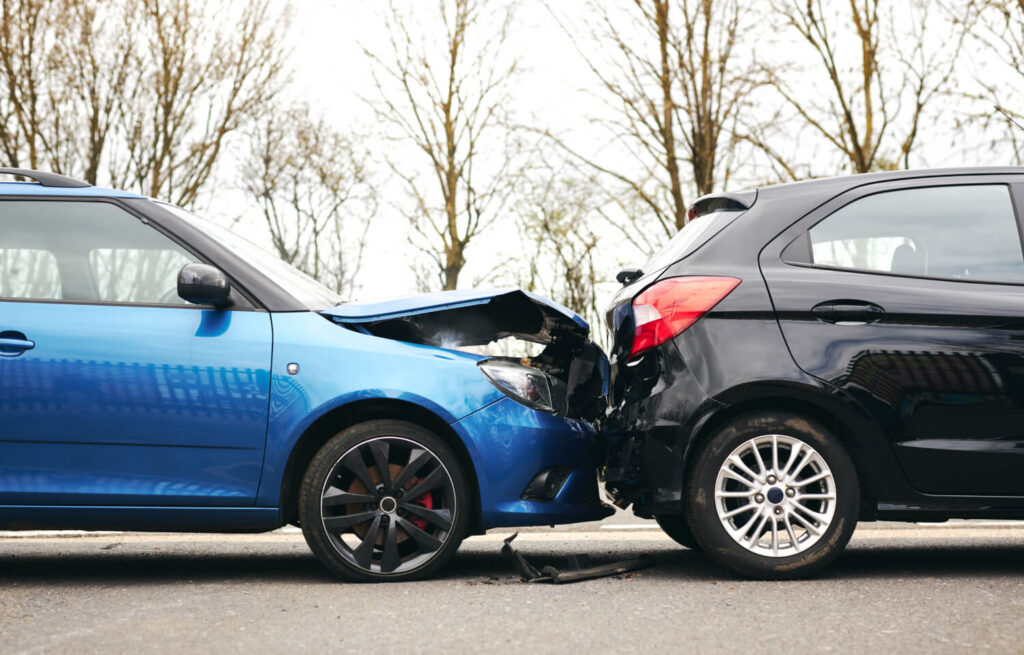
If you or someone you love was hurt because a negligent minor was behind the wheel of a car or motorcycle, you’re probably dealing with two things at once: a physical recovery that may take months or years, and a nagging question about who’s actually going to be held accountable for your serious personal injuries and damages. A child or teenager usually doesn’t have assets, income, or insurance of their own — so where does that leave you?
The good news: California law anticipated this exact problem. There are specific statutes designed to make sure a minor’s inexperience or recklessness doesn’t leave an injured survivor without a remedy. As a personal injury attorney, this is one of the first things I explain to clients who were hurt by a young or teenage driver — because knowing who can actually be made accountable changes how we build the case from day one.
You Are Not Limited to Suing a Child
It would be unrealistic — and usually pointless — to pursue a lawsuit against a 16-year-old with no income and no assets. California law recognizes this, which is exactly why it built parental and owner liability directly into the Vehicle Code. As your attorney, my job is to identify every legally responsible party, not just the person who happened to be driving.
There are generally three paths to accountability in these cases, and a strong case often uses more than one at the same time.
- The Vehicle Owner (Permissive Use)
Under Vehicle Code § 17150, the registered owner of a vehicle is legally responsible when they allow someone to drive it and that person causes injury through negligence. This applies even if the owner wasn’t in the car and wasn’t anywhere near the crash.
This matters enormously in child-driver cases, because permission doesn’t have to be spoken out loud. If a parent knew their teenager regularly took the family car, or knew a younger child had access to keys and didn’t take reasonable steps to prevent it, a court can find “implied permission” — and that opens the door to holding the parent liable as the owner, not just as a parent.
- The Parent Who Signed the License Application
If the young driver is a licensed teenager, Vehicle Code § 17707 is often the most direct path to recovery. Any parent or guardian who signed the minor’s driver’s license application becomes jointly and severally liable for damages the minor causes through negligent driving. In plain terms: signing that application makes the parent legally on the hook right alongside their child, for any harm the teen’s driving causes — no need to prove the parent did anything wrong beyond co-signing.
- The Parent’s Own Negligence
Not every case involves a licensed teen driving with clear permission. Some of the most serious cases I’ve handled involve a young child — far too young to drive — who got behind the wheel because a parent left keys accessible, left a vehicle running and unattended, or ignored a known pattern of a child climbing into the car. In situations like this, permissive-use liability may not apply cleanly, since it depends on the owner having allowed the use.
That doesn’t mean the family walks away from responsibility. Instead, we build the case as an ordinary negligence claim: the parents created a foreseeable danger by failing to secure the vehicle or supervise a child known to be curious about it. This is a fact-intensive case, and it’s exactly the kind of claim where early investigation — photos, witness statements, any prior incidents — makes the difference between a strong recovery and a weak one.
What About “Willful Misconduct” Claims?
Some injury attorneys will also mention Civil Code § 1714.1, which lets parents be held liable for a minor’s willful misconduct — meaning the child acted intentionally, not just carelessly. I want to be straightforward with you about this one: it has a capped dollar limit that adjusts periodically, and it’s a poor fit for an accidental crash. It’s more relevant to intentional acts like vandalism or bullying than to a driving accident. I mention it because you may see it referenced elsewhere, but for most child-driver injury cases, permissive-use and negligence theories carry far more weight.
Motorcycle Cases Deserve Extra Attention
If you were injured by a minor riding a motorcycle rather than a car, the same basic framework applies — owner liability and parental liability principles extend to motor vehicles generally. But motorcycle cases often come with additional complexity: licensing and endorsement requirements are stricter, insurance coverage can be thinner, and injuries tend to be more severe because there’s no metal frame protecting the rider or the person they harm. If you were a pedestrian, cyclist, or occupant of another vehicle injured by a minor on a motorcycle, it’s worth having an attorney examine the insurance picture closely, since motorcycle policies and umbrella coverage don’t always work the way people expect.
Why This Matters for Your Insurance Recovery
Here’s something clients are often relieved to hear: in practice, most of these claims are ultimately paid out through the family’s auto or homeowner’s insurance policy, regardless of which legal theory technically applies. That means the conversation isn’t just about which statute fits best on paper — it’s about identifying every applicable policy and making sure your claim is presented in a way that maximizes what’s actually available to compensate you.
Frequently Asked Questions
The child who hit me wasn’t licensed. Does that change anything?
It doesn’t eliminate liability — if anything, it often strengthens your case. An unlicensed minor driving demonstrates a lack of proper supervision and control by the parents, which supports both permissive-use and direct negligence theories.
What if the child took the car without the parents knowing at all?
This is where a careful investigation matters most. We look at how the child got access — where the keys were kept, whether the vehicle was running, whether this had happened before — to determine whether the parents’ own carelessness created the danger, even without formal “permission.”
Can I sue both parents, or just the one whose name is on the title?
Generally, permissive-use liability under § 17150 runs to the registered owner specifically. If only one parent is on the title, that limits who can be pursued under that particular statute — but a direct negligence claim against both parents may still be available depending on the facts.
Is there a cap on how much I can recover?
It depends on the legal theory. The willful misconduct statute has a set, periodically adjusted cap. Permissive-use and negligence claims generally are not capped that way and can be pursued up to available insurance limits and beyond, depending on the family’s assets.
How long do I have to file a claim?
California’s statute of limitations for personal injury claims is generally two years from the date of the injury, though there are exceptions that can shorten or extend that window. Given how fact-specific these cases are, it’s important not to wait to get an evaluation.
Let’s Talk About Your Case
If you or a family member was injured by a minor driving a car or motorcycle in California, you deserve to understand exactly who can be held responsible and how to secure the compensation you’re owed for medical bills, lost income, and pain and suffering. These cases often involve overlapping insurance policies and multiple potentially liable parties, and the details matter — which is exactly why an early, thorough case evaluation makes such a difference.
Contact our office today at (415) 432-7290 for a free, no-obligation consultation. We’ll review the facts of your accident, identify every avenue for recovery, and explain your options in plain language — with no cost or commitment until we’re actually working on your case.
This article is for general informational purposes only and does not constitute legal advice. Every case depends on its specific facts. Contact a licensed California attorney to discuss your individual situation.