
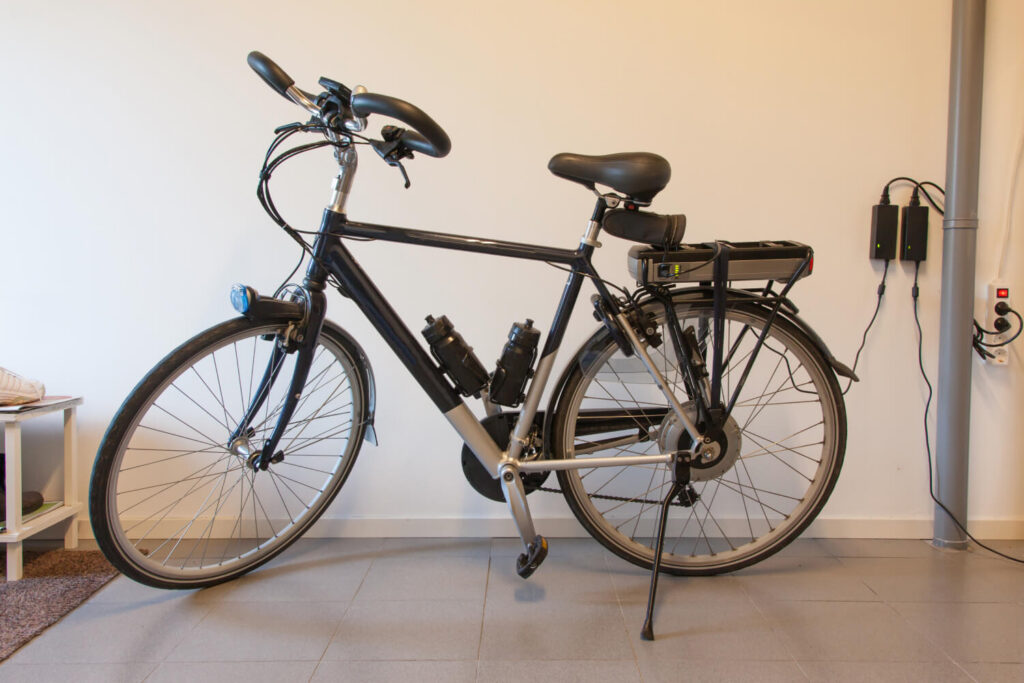
E-bikes and e-scooters have become a fixture of daily life — commuting, delivery work, weekend errands. I have two e-bikes in my garage right now and have been riding e-mountain bikes since 2018. They’re efficient, fun, and generally safe to ride. But the lithium-ion batteries that power them carry a fire risk that most owners don’t fully understand until something goes horribly wrong.
As these devices have proliferated, so have battery fires, and the numbers are serious enough that every owner, parent, landlord, and building manager should know the basics and take proper precautions to avoid serious burns or fatal fires.
Why These Batteries Catch Fire
Lithium-ion batteries store an enormous amount of energy in a small package, which is exactly what makes them useful — and occasionally dangerous. When a cell is damaged, defective, overcharged, or exposed to extreme heat, it can enter a process called thermal runaway. A short circuit inside the cell generates heat, which triggers a chemical reaction that generates more heat, which spreads to neighboring cells.
The result is a fire that ignites within seconds, burns extremely hot, can reignite after appearing to be extinguished, and is notoriously difficult or impossible to put out with water alone. Unfortunately, a fair number of lithium-ion batteries are simply defective, and many lack basic safety features that help to prevent fires and explosions. This is different from a typical house fire. Fire departments have had to develop entirely new tactics — including fire blankets and specialized suppression methods — specifically for lithium-ion battery incidents.
Over the last few years, I personally have worked on several e-cigarette fire cases, where the lithium-ion battery fire caused an actual explosion in my client’s pocket. The burns are horrific, and the fires have been nearly impossible to put out. A friend of mine is working on a tragic case involving a woman who died when an e-bike on a charger malfunctioned and lit her whole house on fire.
It took less than a minute for the battery to engulf her entire home, and she was trapped on the second story. Sadly, the rapidly escalating fire caused her wrongful death. And this is not the only story I have heard from my friends across the country.
The Scale of the Problem
The data varies by source, but the trend is consistent and well documented by credible agencies:
- The National Fire Protection Association has made lithium-ion battery safety in e-bikes and e-scooters a national fire-prevention priority, noting that damaged batteries can overheat, ignite, and even explode.
- According to UL Solutions data cited by Consumer Reports, lithium-ion battery-powered consumer devices caused more than 3,000 fires and 188 explosions nationwide since 2022.
- New York City — which has the country’s highest concentration of e-bikes, largely due to delivery workers — logged 268 lithium-ion battery fires in 2023 alone, resulting in 18 deaths and about 150 injuries.
New York’s experience is also the best evidence we have that regulation works: after the city required e-bikes, e-scooters, and their batteries to carry independent safety certification, fire deaths dropped sharply — reportedly by roughly 79% in the first year the law was in effect, comparing similar nine-month periods.
What Actually Causes These Fires
Overwhelmingly, the fires trace back to a small set of preventable causes:
- Uncertified or counterfeit batteries and chargers. Cheap replacement batteries and third-party chargers sold online often lack basic safety engineering — no proper battery management system, no thermal cutoffs, inconsistent cell quality.
- DIY conversion kits. Retrofitting an ordinary bicycle with an aftermarket battery and motor, without professional installation, is one of the most common sources of fires in dense urban environments.
- Physical damage. A cracked or punctured battery casing, from a drop or crash, can trigger an internal short circuit that isn’t visible from the outside.
- Improper charging. Leaving a battery on the charger far longer than needed, charging with the wrong charger, or charging in extreme heat or cold all increase fire and explosion risk.
- Poor storage. Batteries stored or charged in hallways, near exits, or piled together in close quarters turn a small fire into a life-safety emergency, because they block escape routes and spread rapidly.
- Unfortunately, out of the millions of lithium-ion batteries sold in the U.S. each year, some batteries are simply dangerous and defective, and the defective nature of some of these batteries can cause deadly fires or explosions.
What Regulators Are Doing About It
The clearest legal response so far has come out of New York City. Local Law 39 of 2023 requires that any e-bike, e-scooter, or other micromobility device sold, leased, or distributed in the city be independently certified — e-bikes to UL 2849, e-scooters to UL 2272, and batteries to UL 2271. These standards test the battery, battery management system, motor, controller, and charger together as a system, rather than certifying a battery in isolation. New York State followed with its own legislation recognizing UL and equivalent international testing standards. Retailers who sell uncertified devices can face civil penalties, and enforcement authorities have been actively removing non-compliant products from stores.
This matters for consumers well beyond New York: UL 2849 and UL 2271 certification marks are becoming the practical industry benchmark nationally, even in places with no legal mandate yet. Looking for that certification mark is one of the simplest things a buyer can do to reduce risk.
Practical Safety Steps

A few habits meaningfully reduce risk:
- Buy certified products. Look for UL 2849 (e-bikes), UL 2272 (e-scooters and other e-mobility devices), or UL 2271 (batteries) markings, or equivalent recognized certifications.
- Use only the manufacturer’s charger and avoid off-brand or “universal” chargers.
- Don’t charge unattended overnight or while you’re away from home for extended periods.
- Charge away from exits and sleeping areas, ideally in a garage or other space that isn’t a primary escape route.
- Inspect batteries after any drop, crash, or water exposure, and stop using any battery that is swollen, leaking, or emitting an odor.
- Avoid extreme temperatures — don’t charge in direct sun, a hot car, or freezing conditions.
- Dispose of damaged batteries properly through a battery recycling program, never in household trash.
A Note on Liability
Fires of this kind increasingly generate legal questions — for consumers injured by defective batteries or chargers, for landlords and building owners whose properties are damaged, and for employers of delivery workers who rely on these devices for work. Product defect claims, premises liability issues, and insurance coverage disputes are all becoming more common as the technology outpaces both regulation and public awareness. Anyone dealing with a battery-related fire or injury should preserve the device and battery (rather than discarding it) and consult an attorney promptly, since the physical evidence is often critical to determining what went wrong and what company should be held responsible.
Even after a fire, a battery might look absolutely destroyed, but our office works with battery experts who can help to identify the maker of the battery and the source of the malfunction even after a fire. While product liability cases and the civil justice system are excellent for making wrongdoers accountable, the key is in taking the proper steps to avoid lithium-ion battery fires before they start. Reach out to Choulos, Choulos & Wyle at (415) 432-7290 for help or if you have any questions.
This article is for general informational purposes and does not constitute legal advice. Readers facing a specific incident or claim should consult a qualified attorney. If you or someone you love has suffered serious injuries or the wrongful death of a loved one from a lithium-ion battery fire or explosion, please feel free to call our firm for a free consultation.