You might be replaying the moment again and again. You were riding carefully, watching traffic, doing everything you were supposed to do. Then the front wheel dropped into a deep pothole, or your tire slipped on a slick Muni rail, or a car cut across a confusing San Francisco intersection and you had no room to escape. One second you were just getting from one place to another. The next you were on the ground, hurt, scared, and wondering how this could have happened.
Now you are dealing with pain, medical bills, missed work, and maybe even a bike that is beyond repair. People might be telling you it was “just an accident” or implying you should have seen it coming. Deep down, you may feel that the road itself played a big part, yet you are not sure how to prove that or what your rights are when the road is the real problem.
In plain terms, this is about how dangerous road conditions in San Francisco, like potholes, rail tracks, and high-risk intersections, can create serious motorcycle crashes and how those facts can be the core of a strong injury claim. It is also about who may be responsible, what proof matters, and how an experienced motorcycle accident lawyer can help you push back against blame that should never have been put on you.
When the road fails you, who is really at fault?
Most people think motorcycle crashes are always about speed, inattention, or “risky riding.” The truth is more complicated. Even the most careful rider can be taken down by a bad road surface or a poorly designed intersection. Federal and state safety experts have confirmed that road design has a major impact on motorcycle safety. For example, the Federal Highway Administration has detailed how roadway conditions affect riders in its guidance on motorcycle safety and roadway safety strategies.
So what does that look like in San Francisco day to day?
- Potholes that grab a front tire or hide in the shadows on a narrow street.
- Muni tracks that run at odd angles through intersections or along the lane where you must ride.
- Uneven pavement, metal plates, or trenches left by construction crews with little warning.
- Intersections on the city’s High Injury Network where drivers routinely run red lights, turn across bike lanes, or face confusing signals.
When a crash happens in these conditions, you might hear “you should have slowed down” or “you knew the rails were there.” That kind of blame can sting, especially when you know you were doing your best. The legal question, though, is different. It is whether a city agency, contractor, transit authority, or driver created or ignored a danger that made your crash far more likely.
Because of this tension, you might wonder how anyone can sort out what really happened and who should pay for what you are going through.
How dangerous SF roads turn into complex motorcycle claims
Road condition cases are not simple “fender benders.” They are layered. The emotional, financial, and legal challenges often pile up all at once.
Emotionally, you may feel betrayed by a city you know well. You trusted the road, the signals, the transit system. You might be angry that a hazard you had noticed for weeks was ignored until it took you down. Or you may feel guilty, as if you should have been able to avoid it, even though road safety research shows that some hazards give riders almost no chance to react in time.
Financially, the pressure can become intense. Serious motorcycle injuries often mean surgeries, months of rehab, and time away from work. Your gear and bike might need to be replaced. Insurance companies may offer a quick settlement that sounds helpful at first, yet it often does not come close to covering long-term medical needs, lost earning potential, or the impact on your daily life.
Legally, road hazard motorcycle accidents in San Francisco are different from a typical rear-end collision. Here are a few “what if” situations that show why.
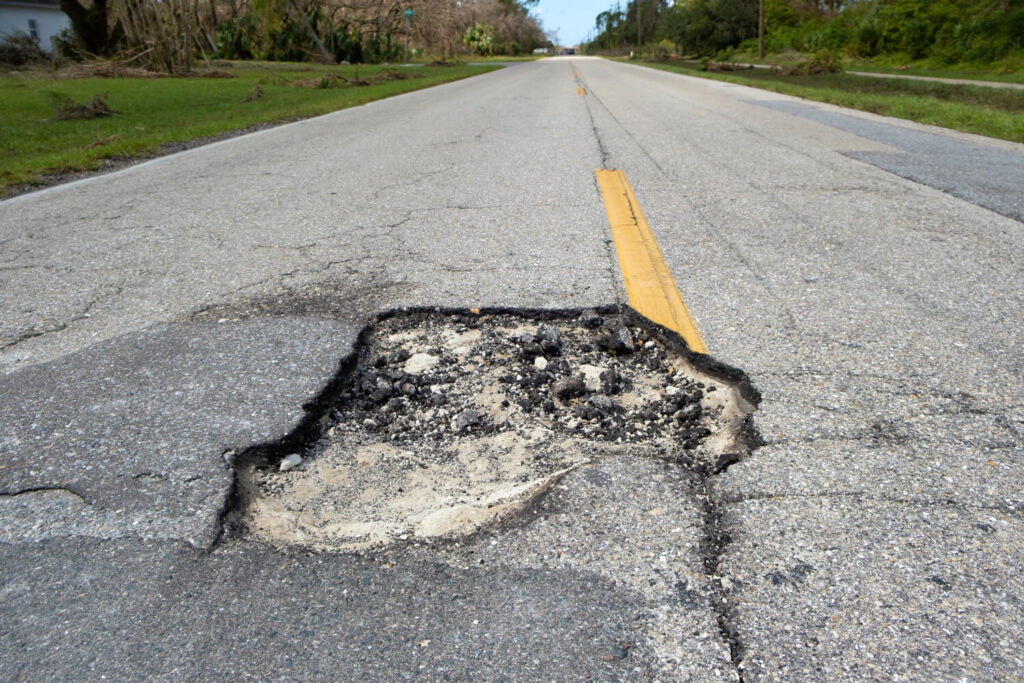
- Pothole on a city-maintained street. You hit a deep, unmarked pothole, are thrown from the bike, and suffer a broken leg. The city might be responsible if it knew or should have known about the defect and failed to fix it within a reasonable time.
- Muni rail at a bad angle. You cross a wet rail at an intersection where the tracks cut across the lane at a shallow angle. Your tire slips into the groove, and you go down. Design choices and warning signs might be at issue, along with maintenance.
- High-risk intersection with poor visibility. You are traveling straight through an intersection known for severe crashes. A car turns left across your path, claiming they never saw you. If that intersection is on the city’s High Injury Network and has a history of similar collisions, that record can support your claim that more should have been done to protect people like you.
These cases may involve public entities, like the City and County of San Francisco, Caltrans, or transit agencies, as well as private construction companies or property owners. Claims against public entities have very short deadlines and specific notice rules. Waiting too long, or not framing the claim correctly, can close the door on your case before it really starts.
That is why working with a seasoned San Francisco motorcycle accident attorney can be so important. The right team knows how to gather evidence, pinpoint responsibility, and push back when others try to use your love of riding against you.
What should you weigh: handling it alone or working with a motorcycle accident lawyer?
You may be asking yourself whether you really need legal help. Maybe the insurance adjuster seems friendly. Maybe you are worried about the cost of a lawyer. It can help to look at the tradeoffs side by side.
| Issue | Handling claim on your own | Working with a motorcycle accident lawyer |
| Finding who is responsible for the road hazard | Rely on your own photos and memory. May miss potential public or private defendants. | Investigate city records, prior complaints, and design documents. Use data like the San Francisco High Injury Network to show known danger areas. |
| Understanding deadlines for public entity claims | Risk missing strict government claim deadlines, which can be as short as 6 months. | Track and meet all notice requirements and statutes of limitation to keep your case alive. |
| Proving the road design or maintenance was unsafe | Hard to access technical standards or safety research on your own. | Use studies like California’s work on improving motorcycle safety by enhancing roadway design to show what should have been done. |
| Dealing with insurance company pressure | May accept low offers because you are tired, in pain, or unsure what your claim is worth. | Have an advocate who values your claim based on medical needs, long-term impact, and case law, then negotiates from a position of strength. |
| Time and stress | Handle calls, forms, evidence, and deadlines while trying to heal. | Shift the legal load to a team that manages the process so you can focus on recovery. |
So where does that leave you? It usually comes down to how much you want to carry on your own while you are trying to rebuild your health and your life.
Three concrete steps you can take today
You do not have to have everything figured out right now. There are a few focused steps that can protect your health and your rights, even while things still feel chaotic.
- Preserve every bit of evidence about the road and the crash
Road conditions can change quickly, especially in a busy city. Crews may patch a pothole, grind rails, or repaint markings after a serious crash. Try to:
- Take clear photos and videos of the scene, including the defect, nearby signs, signals, and any skid marks or debris.
- Capture the surrounding area so it is clear which intersection, lane, or track segment was involved.
- Save your helmet, gear, and damaged bike parts. They can tell a story about impact and direction.
- Write down what you remember as soon as you can. Small details can matter later.
- Get thorough medical care and be honest about every symptom
Motorcycle crashes often cause injuries that are not obvious at first, especially to the head, neck, and spine. Even if you walked away from the scene, you should:
- See a doctor or go to the emergency room right away if you have not already.
- Tell your providers about every symptom, even if it feels minor.
- Follow through on recommended imaging, physical therapy, or specialist visits.
- Keep copies of medical records, bills, and work notes. They help show the full impact of the crash.
Good medical documentation protects your health and also provides the foundation for any injury claim, whether the case involves a dangerous intersection, a faulty rail crossing, or a sudden pothole.
- Talk with a San Francisco motorcycle accident lawyer who understands road hazard cases

You do not have to commit to anything just to get informed. A conversation with a knowledgeable injury lawyer can clarify:
- Whether a public entity, contractor, or driver may be responsible for your crash.
- Which deadlines apply to your specific situation.
- What kind of compensation may be available for medical care, lost income, and your pain and loss of enjoyment of life.
The attorneys at Choulos, Choulos & Wyle have spent decades standing up for riders and other injury victims in San Francisco. They understand how quickly a case can be lost if the right notices are not filed or if key evidence is not preserved. Just as important, they know how to tell your story in a way that honors what you have been through rather than reducing it to a line on a form.
You do not have to face this road alone
When the road itself contributed to your crash, it is easy to feel powerless. You did not design the intersection. You did not decide where the tracks went or how the street was patched. Yet you are the one in pain, trying to put the pieces back together.
You deserve to have someone in your corner who understands both the human cost of a motorcycle crash and the legal tools that can hold the right parties accountable. You are not asking for a favor. You are asking for fairness.
Our San Francisco personal injury attorneys have been representing victims in a variety of types of cases for decades. The team at Choulos, Choulos & Wyle Personal Injury Lawyers is ready to help. If you or a loved one is a victim, you can turn to our law firm with confidence. To talk about what happened and what you can do next, call (415) 432-7290 today.